


Screen Printing vs. Embroidery vs. Sublimation vs. Heat Transfer: Which Custom Apparel Method Should You Choose?
Screen printing, embroidery, sublimation, and heat transfer each solve a different apparel problem. Compare the look, ideal fabric, order size, artwork, and turnaround factors before requesting your custom apparel quote.
Choosing a shirt is usually the easy part. The harder question comes next: How should the design actually be applied?
Screen printing, embroidery, sublimation, and heat transfer can all produce excellent custom apparel, but they do not produce the same look or work equally well for every project. A method that makes sense for fifty event shirts may not be the best choice for six staff polos. A full color athletic jersey needs a different process from a dark cotton shirt with a simple one color logo.
The quickest answer is this:
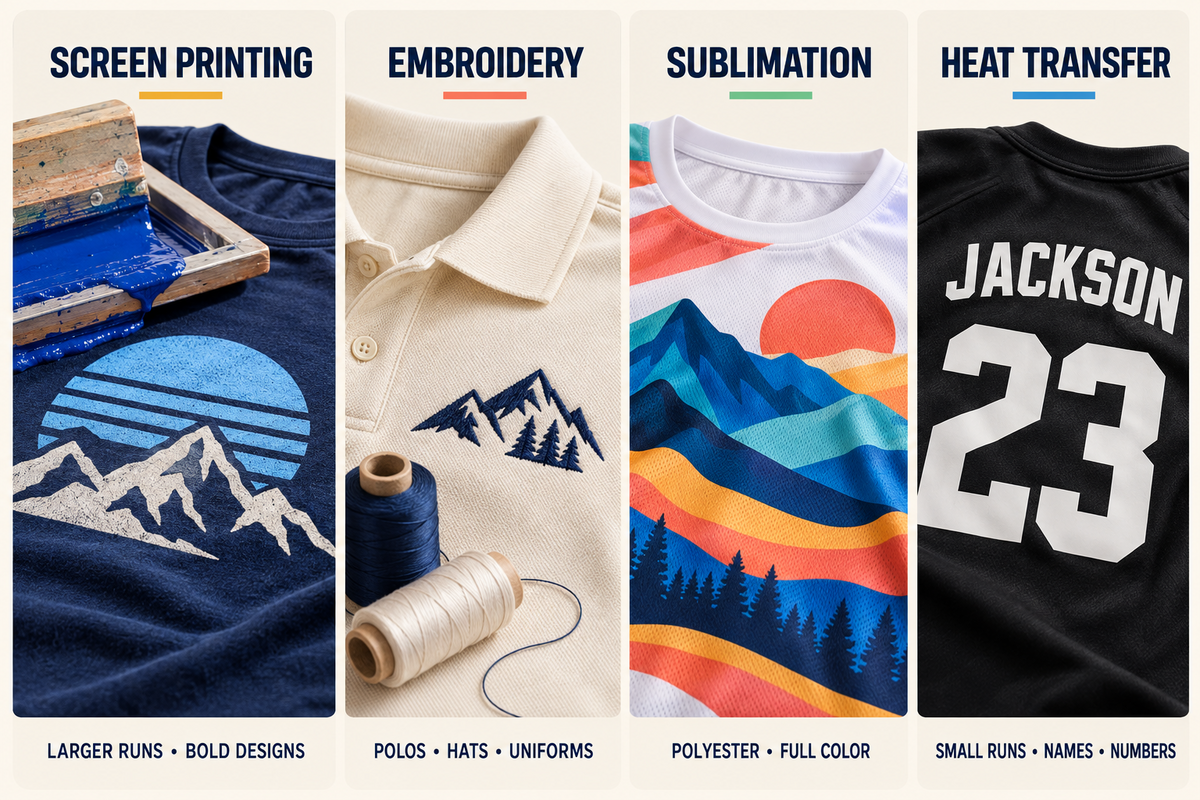
- Choose screen printing for bold designs and larger runs of shirts.
- Choose embroidery for a polished stitched finish on polos, hats, jackets, and uniforms.
- Choose sublimation for vivid full color artwork on light polyester garments or compatible coated products.
- Choose heat transfer for names, numbers, detailed artwork, one off pieces, and many small runs.
That is a useful starting point, but the right answer also depends on your garment, color, artwork, quantity, placement, budget, and deadline. This guide explains the tradeoffs so you can request a quote with confidence.
Need help choosing? Tell DHSolutions Pack, Ship, N Print what you are making, how many you need, and when you need them. We will recommend the method that fits the project.
Quick comparison of the four methods
| Method | Often best for | Works especially well on | Main visual quality | Important limitation |
|---|---|---|---|---|
| Screen printing | Larger runs, event shirts, business orders, bold graphics | Cotton and many common shirt blends | Solid, durable ink with strong color | Each color and setup can add complexity, so very small orders may suit another method better |
| Embroidery | Polos, hats, jackets, uniforms, staff apparel | Stable garments that can support stitching | Textured, polished, professional | Tiny details, very small lettering, and photographs may not translate cleanly into stitches |
| Sublimation | Athletic apparel, full color patterns, photo designs, compatible drinkware | White or light polyester and specially coated items | Smooth color that becomes part of the material | It is not the normal choice for dark shirts or 100 percent cotton |
| Heat transfer | Names, numbers, small runs, one off pieces, detailed designs | Many apparel types, depending on the transfer material | Crisp and flexible with strong personalization options | The best transfer type and care instructions depend on the garment and design |
When screen printing makes sense
Screen printing pushes ink through a prepared screen onto the garment. Each print color is typically handled separately, which is one reason the method becomes especially efficient when the same design is repeated across a larger quantity.
It is a strong choice for:
- Event and fundraiser shirts
- Business or staff shirts
- Church, school, and organization orders
- Bold logos and graphic artwork
- Orders that repeat the same design across many garments
Screen printing is known for strong color and a classic printed feel. It also works well when a design needs to stand out on a dark garment, though the exact ink and setup depend on the shirt and artwork.
Quantity matters because the screens and color setup require preparation before production begins. Once everything is set, repeating the design across a larger run becomes efficient. For a very small order, especially when every shirt needs a different name or number, heat transfer may make more sense.
Screen printing does not automatically mean “simple artwork only.” Detailed designs can be printed, but the number of colors, gradients, tiny lines, and garment color all affect how the artwork should be prepared. A clean vector logo is ideal, but good source artwork can often be adjusted for production.
When embroidery makes sense
Embroidery builds the design with thread. The result has physical texture and a polished appearance that people commonly associate with uniforms, company apparel, clubs, and professional teams.
It is a strong choice for:
- Polo shirts
- Hats and caps
- Jackets and outerwear
- Uniforms and workwear
- Small chest logos
- Business names and clean text
Embroidery is often chosen when presentation matters as much as visibility. A stitched logo on a polo communicates something different from a large printed graphic on a T shirt. Neither is automatically better. They simply serve different purposes.
Artwork must be converted into a stitch file before it can be embroidered. This process is called digitizing. It tells the machine where to place stitches, which direction they should run, and how dense they should be.
Very small lettering, thin lines, fine gradients, and photographic detail can be difficult to reproduce with thread. If a logo has delicate elements, we may recommend simplifying it, increasing the size, or using another method. The garment also needs enough stability to support the stitched design without excessive puckering or distortion.
For a coordinated staff package, embroidery is especially useful across polos, hats, and jackets. You can keep the same brand identity while choosing an item appropriate for each role or season.
When sublimation makes sense
Sublimation uses heat to move dye into compatible material. Instead of creating a separate layer on top of the fabric, the color becomes part of the polyester fibers or the coating on a compatible product.
It is a strong choice for:
- Light polyester athletic shirts
- Full color jerseys
- Large patterns and all over designs
- Artwork with gradients or photographic detail
- Compatible coated mugs, bottles, and other products
Sublimation can create vivid color while keeping the fabric surface smooth. Because there is not a thick printed layer sitting on top, it is especially useful for performance apparel and broad color coverage.
The material is the deciding factor. Sublimation works best on white or light polyester fabric and on products that have been manufactured with a compatible coating. It is not the standard method for dark shirts or 100 percent cotton. Official Epson guidance similarly recommends white or light polyester for the best dye sublimation results.
That restriction is not a flaw. It is simply part of how the process works. If you want a colorful design on a dark cotton shirt, screen printing or an appropriate heat transfer method may be a better route.
When heat transfer makes sense
Heat transfer and vinyl use heat and pressure to apply a prepared design to a garment. The broad category includes materials and processes selected for different fabrics, artwork styles, and uses.
It is a strong choice for:
- Names and numbers
- Team jerseys
- Small runs
- One off shirts
- Detailed or full color designs
- Projects with several personalized garments
- Select quick turnaround orders
Personalization is where heat transfer shines. If twenty team shirts use the same front logo but each needs a different player name and number, transfer lettering makes those individual changes practical. Industry guidance from STAHLS' also highlights heat applied names and numbers as an efficient choice for team apparel.
Heat transfer is also useful when an order is too small to justify the setup of screen printing or when the artwork calls for a transfer designed for fine detail. The exact finish can vary. Some transfers have a smooth print feel, while cut vinyl can feel more distinct on the garment.
Durability depends on the transfer material, fabric, correct application, and garment care. Follow the care instructions provided with the finished order. Turning garments inside out, washing at an appropriate temperature, and avoiding unnecessary high heat can help preserve decorated apparel.
The quantity does not decide everything
People often expect one simple rule, such as screen printing for many shirts and heat transfer for a few. Quantity is important, but it is only one part of the recommendation.
Imagine these three orders:
- Fifty cotton event shirts with the same two color logo
- Fifty athletic jerseys with unique names and numbers
- Fifty light polyester shirts with a full color design covering most of the garment
The quantity is identical, but the likely production method is different because the garment, design, and personalization needs are different.
The same is true for smaller orders. Six embroidered polos may be perfect for a front desk team, while six full color birthday shirts may fit a transfer process better. The goal is not to force the project into a favorite machine. The goal is to match the process to the outcome you want.
Start with the garment and fabric
The blank item affects what is possible. Before finalizing a method, consider:
- Is the garment cotton, polyester, or a blend?
- Is it light or dark?
- Is the surface smooth, textured, stretchy, or water resistant?
- Is it a T shirt, polo, hoodie, hat, jacket, or jersey?
- Does the item need to handle frequent workwear use?
DHSolutions can source garments in the color and size you need, then recommend the appropriate method for the fabric and design. If you already have a specific garment in mind, include its material details when you request a quote. Do not assume every customer supplied item can be decorated in every way. We need to review the item and project first.
Let the artwork guide the method
A simple one color logo gives you different options from a photograph or a complex full color illustration.
Screen printing often favors artwork that can be separated into printable colors. Embroidery needs shapes and lettering that can be translated into stitches. Sublimation is well suited to broad color, gradients, and photo detail on compatible light polyester. Heat transfer can handle personalized text, numbers, and detailed artwork, depending on the transfer process selected.
If your file is not production ready, do not panic. Send the best version you have. A vector file such as SVG, EPS, or AI is helpful for logos, while a high resolution PNG or PDF may work for other designs. A screenshot, tiny web image, or blurry photo may limit the final quality, so provide the original file whenever possible.
If you only have an idea, explain it. The DHSolutions apparel quote form lets you describe the project and submit artwork so the team can evaluate the best route.

What to know before requesting a quote
You do not need to know the production method before contacting us. That is what the consultation is for. You will get a more useful quote if you can provide these details:
- Item: T shirts, polos, hoodies, hats, uniforms, jerseys, or drinkware
- Quantity: Total number of pieces
- Sizes: A size breakdown if you already have it
- Colors: Garment color choices and design colors
- Fabric: Cotton, polyester, blend, or the product name if known
- Artwork: Your logo, design file, photo, sketch, or written idea
- Placement: Front, back, sleeve, left chest, hat front, or another location
- Personalization: Different names, numbers, titles, or other changes between items
- Deadline: The date the completed order must be ready
These details help determine the garment, method, production time, and price. They also reduce delays caused by missing sizes or artwork changes after the quote.
Can custom apparel be ready the same day?
Some custom shirts can be ready the same day, and some projects may be available the next day. Availability depends on the garment, quantity, artwork, decoration method, material availability, approval time, and current production workload.
The safest approach is to share your real deadline at the beginning. A small heat transfer order using available garments may move quickly. A larger embroidered, screen printed, or specially sourced order may require more time. A complex project also needs enough time for artwork review and approval.
Same day and next day options are available on select orders, but they should be confirmed for your specific project before you make plans around them.
Which custom apparel method is best for your project?
There is no universal winner.
Choose screen printing when you want a bold repeated design across a larger group of shirts. Choose embroidery when you want a stitched professional finish on polos, hats, jackets, or uniforms. Choose sublimation when the garment is compatible and the design needs broad, vivid color. Choose heat transfer when the order is small, highly detailed, personalized, or needs names and numbers.
If two methods could work, compare the desired appearance, feel, budget, garment, and deadline rather than choosing only by price. The best method is the one that produces the right result for how the apparel will actually be worn.
Ready to start? Visit the Custom Apparel page or request an apparel quote. DHSolutions Pack, Ship, N Print serves customers at 7900 Bailey Cove Road SE, Suite 8A, Huntsville, Alabama 35802. You can also call 256.800.6844 and explain what you are making.
Frequently asked questions
Is screen printing or embroidery better for a business logo?
It depends on the garment and desired look. Screen printing is excellent for bold logos on T shirts and repeated larger orders. Embroidery creates a polished stitched finish that works especially well on polos, hats, jackets, and uniforms.
What method is best for a small custom shirt order?
Heat transfer is often a practical choice for small runs and one off garments, especially when the design includes names, numbers, or detailed artwork. The fabric and design still need to be reviewed before the method is confirmed.
Can sublimation be used on dark cotton shirts?
Traditional dye sublimation is intended for white or light polyester fabric and compatible coated products. It is not the normal method for dark shirts or 100 percent cotton. Another decoration method may fit those garments better.
Can every logo be embroidered?
Many logos can be adapted for embroidery, but very small lettering, fine lines, gradients, and photo detail may need to be simplified or produced with another method. The design must also be digitized into a stitch file.
Does DHSolutions offer same day custom apparel?
Same day and next day options are available on select orders. Timing depends on the garment, quantity, artwork, production method, inventory, approval time, and current workload. Share your deadline when requesting a quote so availability can be confirmed.
Can DHSolutions help if I do not know which method I need?
Yes. Submit the garment type, quantity, colors, design or idea, and deadline through the apparel quote form. The team will recommend screen printing, embroidery, sublimation, or heat transfer based on the project.